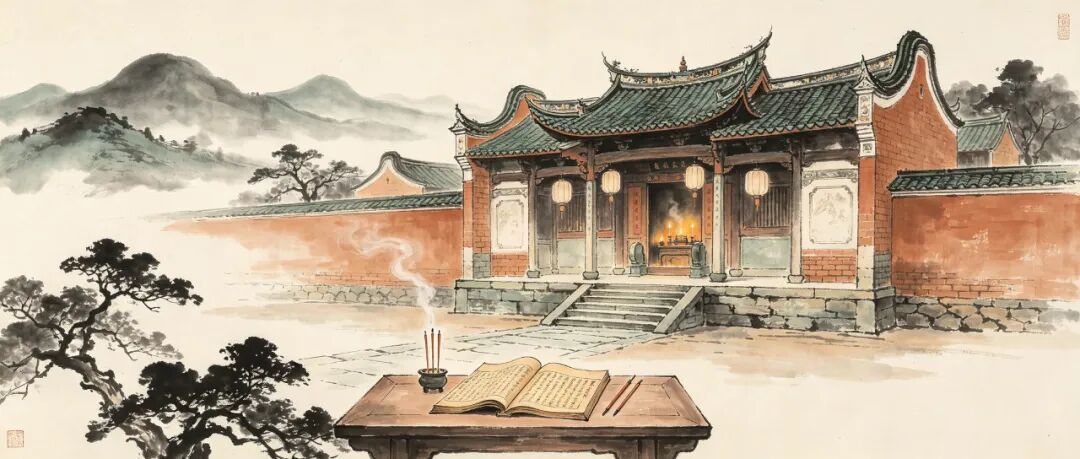
On South Street in Changting, an old town in western Fujian, stands a Yu family ancestral hall. The incense there has never gone out.
In recent years, Yu families who speak many different dialects have found their way here, guided by a single old saying. They arrive, open the old genealogy books, compare generation names — and the first question is almost always the same: “Which son's line does your family belong to?”
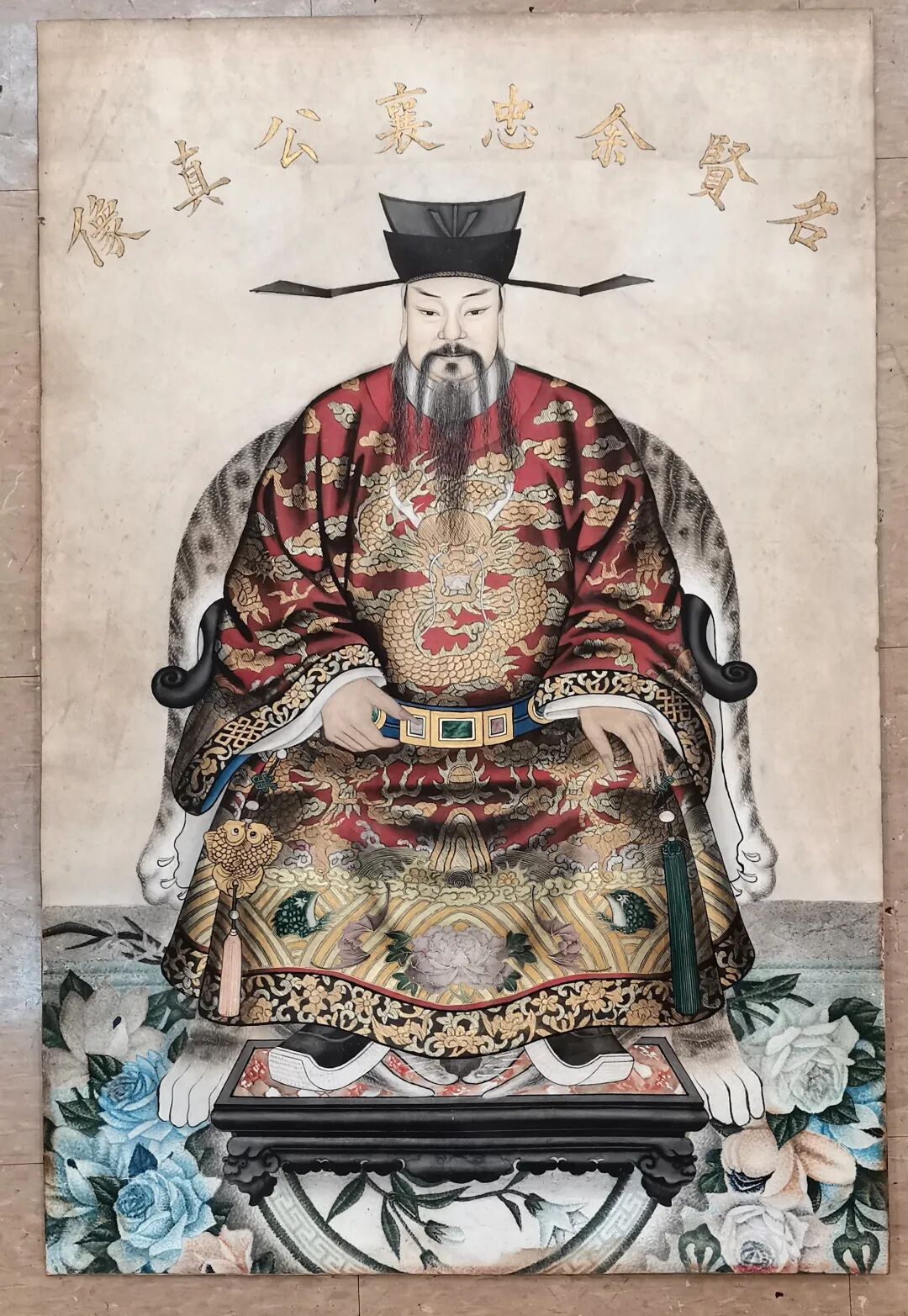
The answer leads back to one man: Yu Qinggao, styled Mingyuan, with the literary name Wangfeng. He was a descendant of the famed Northern Song official Yu Jing, and the founding ancestor of the Yu clan in western Fujian.
A note on names: “Gong” is an honorific meaning “Venerable”; “lang” is a traditional suffix for sons in this lineage, so “Yilang” simply means the First Son. “Tingzhou” is the old name of today's Changting, and a hall name such as “Xin'an” identifies a clan branch.
Yu Qinggao was born in 1133 (the third year of the Shaoxing reign) in Zhangfang village, Linchuan county, Fuzhou prefecture, Jiangxi. In 1165 (the first year of the Qiandao reign) he was appointed vice-governor (tongpan) of Tingzhou prefecture, Fujian. He married a woman of the Huang family; when he died he was buried at Baiye, Ninghua county. He had ten sons — the First Son through the Tenth Son — and the clan's hall name is Xin'an (“New Peace Hall”).
Among Yu families in Fujian, Jiangxi and Guangdong, an old saying still circulates: ten sons ranged across the land; one stayed to guard Tingzhou.
More than eight hundred years later, those ten sons have scattered far. Their descendants now live across Fujian, Jiangxi and Guangdong, and farther afield in Taiwan, Hong Kong, Macau, Southeast Asia and the Americas. Recently, descendants of the Second, Fourth, Fifth and Sixth Sons gathered in Tingzhou to trace their roots — one bloodline, one reunion. What follows is a branch-by-branch guide to the ten sons and where their known descendants are found today, drawn from the genealogical records of the Qinggao Ancestral Hall in Tingzhou, Origins of Hakka Surnames (published in Wuping), and survey notes from the Fuyu Culture council.
The ten sons' paths broadly split into four directions:
Returned to Jiangxi with their mother — ancestral village Zhangfang, Linchuan (Sons 1, 2, 5, 6)
First Son: back to Zhangfang, Linchuan; branch lines later moved to Ruijin and Lanwuzhen, Huichang (see the Bozhuang lineage record).
Second Son: back to Zhangfang; a branch moved to Lanwuba, Huichang; descendants now live across Fuzhou's counties, plus Ji'an, Taihe and Xingguo.
Fifth and Sixth Sons: early records give no details of heirs; their descendants were mostly kept under the First Son's line, and details remain unconfirmed.
Stayed in Ninghua to guard their father's grave (Sons 3, 4)
Third Son: stayed at Baiye, Ninghua, guarding the grave; a branch later moved to Lanwuzhen, Huichang.
Fourth Son: stayed in Ninghua; few records survive; partly merged into the Third Son's line; spread to Qingliu, Mingxi and Jiangle.
Settled in Tingzhou — the core Fujian–Jiangxi branch (Sons 7, 8)
Seventh Son: settled in Changting (Tingzhou city) and founded the Changting line. Descendants are spread across Changting (the county seat, Hetian, Yanggu, Gucheng, Sidu, Xuancheng and more), on into Liancheng, Shanghang, Wuping, Yongding, Zhangping and Minqing; in Jiangxi at Chayuan and Xiaxi (Xingguo), plus Huichang, Shicheng and Pingxiang; there is also a branch in Sichuan.
Eighth Son: from Changting to Liancheng. The records are uncertain — some say he had no heirs, others that he had two sons named Liuwulang and Jiuwulang; some genealogies wrongly list “eight sons” under this line. When comparing records, search by these two grandson names.
Founded lines in East Guangdong — Raoping (Sons 9, 10)
Ninth Son: moved to Raoping, Chaozhou, Guangdong; branch lines later moved to Shefu, Xingguo (via the return of Yuan Yilang) and Jinxi; descendants also appear in Dabu, Meizhou, Jieyang, Haifeng, Chenghai (Shantou) and Wuping.
Tenth Son: moved to Raoping; branch lines settled in Jinxi and Xingguo (Jiangxi), plus Dabu (Qingxi), Pingyuan and Meizhou in eastern Guangdong; many later emigrated to Taiwan and Southeast Asia.
A word of caution. The return of the First, Second, Fifth and Sixth Sons to Zhangfang reflects the main trend of the late Song and early Ming dynasties. But in the Ming and Qing dynasties, some Zhangfang Yu moved back to western Fujian, or onward to Shaowu (Fujian) and Taihe or Wanzai (Jiangxi). When tracing roots, do not assume the trail ends in Linchuan.
By today's administrative boundaries, the main concentrations are roughly as follows:
Fujian Province. The great ancestral hall at Shexiage in Changting is the core home of the Seventh Son's line, with branches in Tingcheng, Hetian, Yanggu, Xuancheng, Sidu, Xinqiao and more. Baiye in Ninghua, where Ancestor Qinggao is buried, is held by the Third and Fourth Sons' grave-guarding lines. Shanghang and Wuping hold Seventh and Ninth Son branches (towns such as Zhongchi and Xiaba). Seventh Son descendants also settled in Kanshi, Hukeng and Gaobei in Yongding, and many lines in Longyan and Liancheng came from Changting and Shanghang.
Jiangxi Province. Zhangfang in Linchuan, Fuzhou, is the ancestral home of the First, Second, Fifth and Sixth Sons. Ruijin, Xingguo, Yudu and Yongfeng hold major Seventh Son migrations (villages such as Xiaxi and Guanyuan). Taihe and Wan'an hold many lines that returned from Tingzhou.
Guangdong Province. Raoping is where the Ninth and Tenth Sons founded their lines, radiating to Chenghai (Shantou), Dabu, Meixian, Fengshun and Chaozhou. In the Qing dynasty, descendants in eastern Guangdong moved on to Huizhou and the Hailufeng area.
Other provinces. Sichuan and Chongqing — during the Ming–Qing “Huguang fills Sichuan” migration, many Yu descendants from Tingzhou and eastern Guangdong moved inland to Sichuan. Guangxi (Hezhou, Zhaoping, Fuchuan) has lines from Fujian and Guangdong. Zhejiang (Lishui, Xuanping) has records of Seventh Son descendants. Taiwan — descendants of the Ninth, Tenth and Seventh Sons crossed over in large numbers from the late Ming through the Republican era, settling in Taoyuan, Hsinchu, Miaoli, Taichung and Kaohsiung.
Overseas. In Southeast Asia (Malaysia, Singapore, Indonesia, Thailand, the Philippines), most came from the Ninth and Tenth Sons' lines via Raoping, while Seventh Son lines went south from Tingzhou. In the Americas (United States, Canada), most arrived by way of Taiwan, Guangdong and Fujian. In Hong Kong and Macau, Yu families from Fujian and Guangdong have settled and maintain clan associations.
A note of caution. These Hong Kong, Macau and overseas Yu organizations are largely worldwide clan bodies. You are welcome to write to them for help tracing the Qinggao line, but not all of their members are descendants of Yu Qinggao.
The Seventh Son line (best documented). The “Yu Family Ancestral Hall” (Qinggao Shrine) stands on South Street, Changting; there is also a Yu ancestral hall at Hetian. The lineage chain “Qinggao — Seventh Son — Wusanlang — Huazu — Youchun — Ruqing / Ruji…” can be matched across Changting, Liancheng, Shanghang, Wuping, Yongding (Kanshi) and Chayuan / Xiaxi in Xingguo, Jiangxi.
The Ninth and Tenth Sons' lines (the East Guangdong main line). Founded at Raoping. Yuan Yilang (a son of the Ninth Son) moved to Shefu, Xingguo; another branch, “the Jiu Gong line”, returned from Raoping to Jiangxi and then back to Raoping; the Tai Gong branch at Qingxi, Dabu, identifies itself as Tenth Son descendants. Zhongchi in Wuping is home to Ninth Son descendants — over a thousand people today.
The Third Son line. Stayed at Baiye, Ninghua, guarding the grave, then split to Lanwuzhen, Huichang, overlapping with the First Son's line in several places in Huichang. Third Son descendants also settled in Shangju (Liancheng) and Zhoutian (Xingguo).
The First and Second Sons' lines. The main root is at Zhangfang, Linchuan. “Jiqing and Jitang” at Lanwuzhen / Lanwuba, Huichang, are early descendants (grandsons) — a key anchor for the Qinggao line in southern Jiangxi.
The Eighth Son line. The Yangduo branch in Yongding (partly settled in Tong'an, Xiamen, and Jiangxi), mainly following the Changting → Liancheng route. Whether the Eighth Son had heirs is still debated within the clan.
How to Search: Avoid These Pitfalls
1. Fix the branch number before the county. Generation names differ considerably between the First, Seventh and Ninth Son lines within the Qinggao system. Ask which “son number” your ancestors remembered — it is more reliable than asking “which generation of Qinggao”.
2. Use the key reverse-search names. For the Seventh Son line, look for “Wusanlang, Huazu, Youchun, Ruqing”; for the Ninth Son line, “Yuan Yilang”; for the First Son line, “Jiqing”. These grandson names appear most often in the old genealogies of Fujian, Jiangxi and Guangdong.
3. Contact the institutions. The Yu Family Ancestral Hall on South Street, Changting (Tingzhou Qinggao Clan Association), the Yu Committee of the Fujian Provincial Surname Origins Research Association (Fuyu Culture), and the Yu clan associations of Xingguo and Huichang, Jiangxi — all hold the newly compiled (post-2010) master tables of Qinggao's ten branches.
4. Beware of a common mix-up. The line “Yu Jing — Bozhuang — Qinggao” is NOT the same as “Nianqilang (the Yongding Tianxin line)” or “Boyu Nianqilang (the Wanzai line)”. Do not mistake “Nianqilang” for one of Qinggao's ten sons.
Overseas Yu Clan Associations: Contact Details
The following are public contact details for several overseas Yu clan organizations, useful when tracing roots:
Hong Kong Yu Clan Association — 11/F, Yu Building, 304 Des Voeux Road Central, Hong Kong; tel +852-25437809; email info@hkyues.com
Yu Fengcai General Association (San Francisco, USA) — tel +1-415-982-1667
Yu Fengcai General Association (Vancouver, Canada) — tel +1-604-684-3074
Malaysia Yu Clan General Association — tel 019-2259811; 012-6399083
Tracing roots, in the end, is about putting scattered names back into the same genealogy book.
The ancestral hall in Tingzhou still stands, and its incense has never gone out. If your family also carries a memory of “which son's line” you belong to, leave a comment below — perhaps the next reunion will be for your branch.
— Tingzhou Yu Family Ancestral Hall Committee
31st August 2026
来源:汀州余氏家庙理事
 手机版
手机版