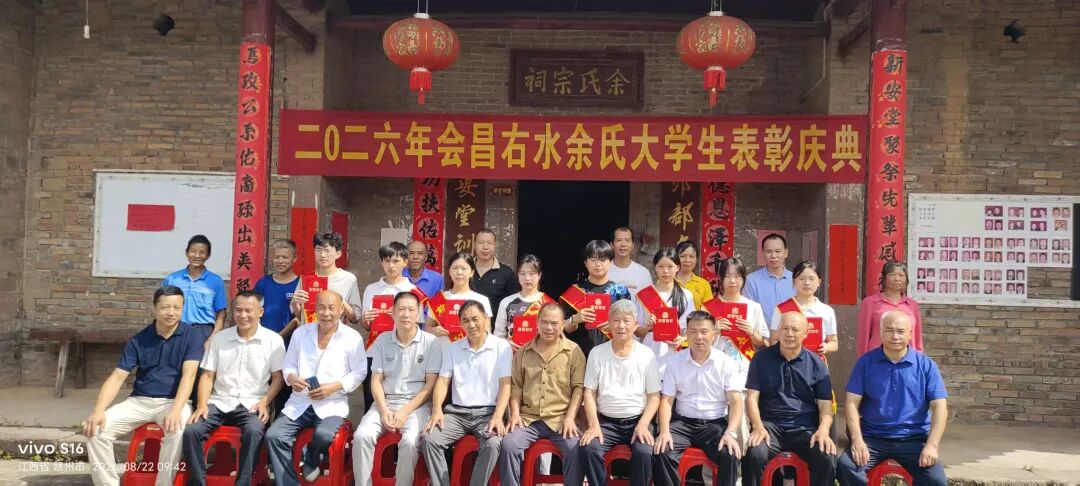
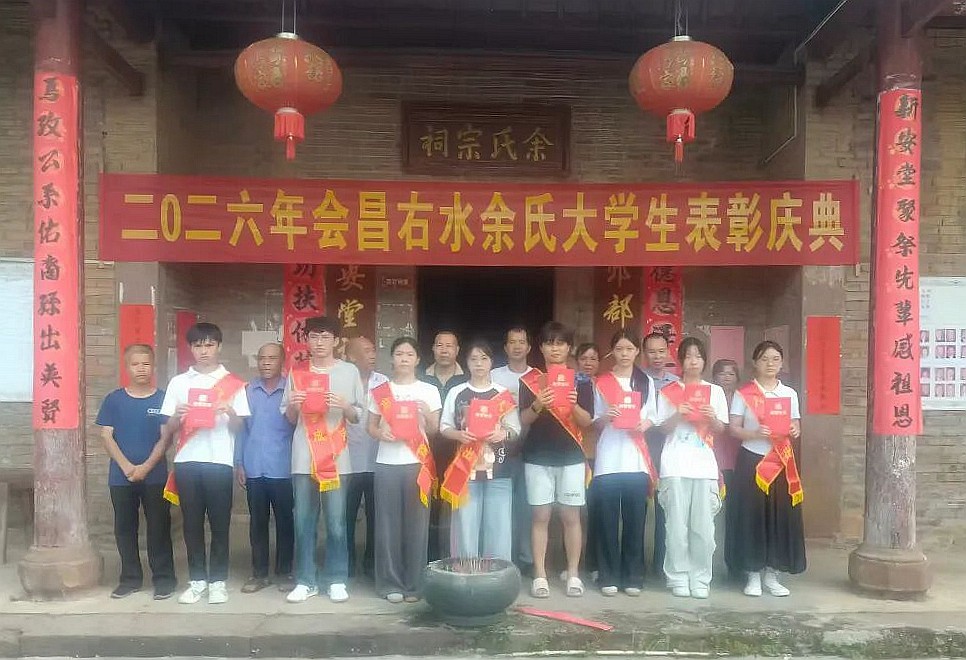
Autumn brings refreshing breezes and osmanthus fragrance. The ancestral hall glows with renewed splendor, carrying forward an enduring cultural heritage. On August 22, 2026, the Xin’an Hall of the Yu Clan in Youshui, Huichang, was filled with devout worshippers and festive joy. Clansmen gathered at the ancestral shrine for the annual scholarship‑awarding ceremony honoring outstanding young scholars. The event celebrated the clan’s promising youth, upheld the age‑old tradition of valuing education, inspired younger generations to strive for excellence, and perpetuated the clan’s cultural legacy.
The Yu Clan boasts a long‑standing history and has produced numerous distinguished figures. This branch traces its lineage to Yu Qinggao (also known as Mingyuan, art name Wangfeng; some genealogical records refer to him as Shenqing), the 7th‑generation descendant of the Northern‑Song loyal statesman Yu Jing (Duke Zhongxiang), and the 63rd‑generation descendant of Yu You. Born in 1133, Yu Qinggao originally hailed from Zhangfang Village, Linchuan Prefecture, Fuzhou, Jiangxi. During the Song Dynasty, he travelled to Fujian for official service, serving as Circuit Judicial Commissioner of Minjiang and Assistant Prefect of Tingzhou. He settled in Changting, Fujian, and became the founding ancestor of the Yu lineage in Tingzhou.
Yu Qinggao fathered ten sons, whose descendants spread across five provinces throughout China. A well‑known clan saying recounts: *“Ten sons ventured across the nine provinces; one son remained to guard Tingzhou.”* His second‑generation descendant Yu Qilang stayed behind in Baihu Village, Changting, Fujian, as the ancestor of the Tingzhou‑based branch. Yu Wulang (also named Wuzi), the second son of Yu Qilang, founded the Youshui Yu lineage in Huichang.
In years past, Yu Siming, eldest son of Yu Wulang, left his hometown. Together with his younger brothers Sineng and Sitai, and their mother Madam Liu, he migrated to Jiang’ou, Shangbao of Youshui in Huichang (present‑day Pinglan, Tianfeng Village, Youshui Township). He became the founding ancestor of the Youshui Yu Clan. From that time onward, the clan multiplied and thrived, upholding the ancestral ethos of revering scholarship and farming as cornerstones of family life.
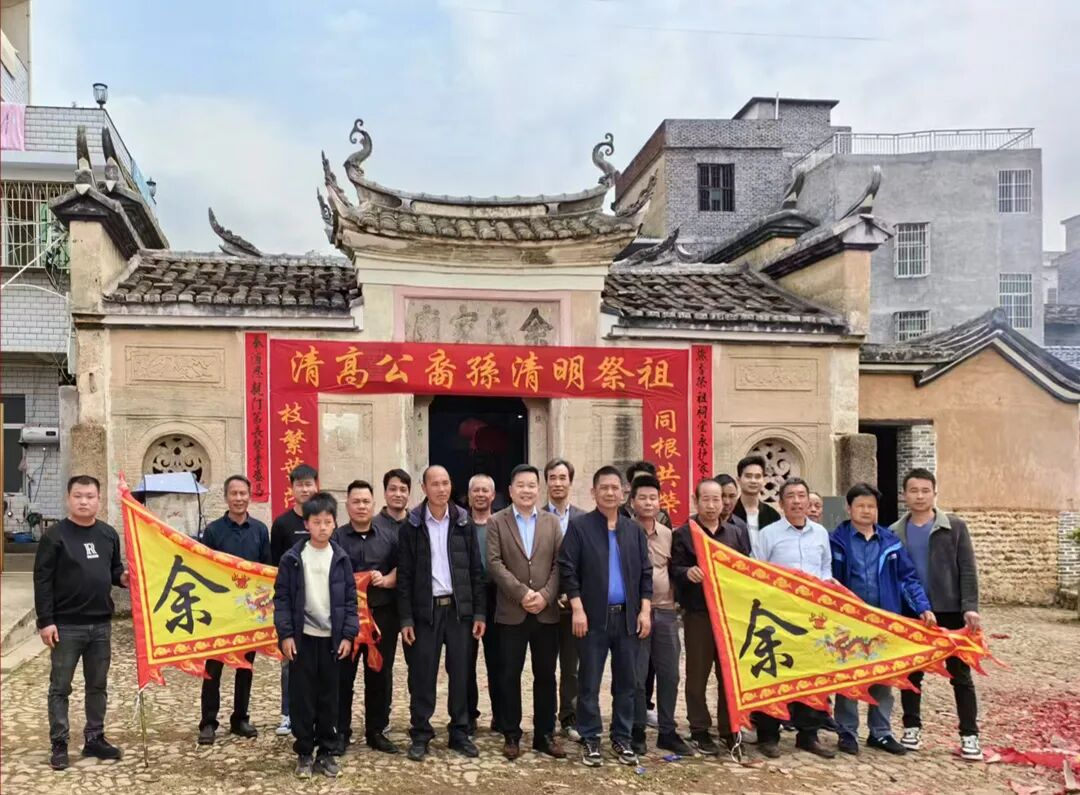
Tingzhou, the ancestral homeland, possesses profound cultural roots embodied in its well‑preserved ancient shrines. The Yu Family Shrine in Xiajie, Hetian of Changting, built in the Ming Dynasty, stands as a classic Hakka ancestral building and a county‑level protected cultural relic in Changting. The Hetian Yu Family Shrine in Fujian and Xin’an Hall in Youshui of Huichang, located respectively in Fujian and Jiangxi provinces, echo one another across the distance. Both commemorate the virtues and merits of the lines descended from Yu Qinggao and Yu Qilang. Every Qingming Festival, descendants of Yu Wulang from Youshui travel to the Yu Family Shrine in Hetian, Changting to pay homage to their forebears.
Xin’an Hall of the Youshui Yu Clan in Huichang endured centuries of wind and weather. To remember ancestral virtues, sustain clan bonds and unite clansmen, enthusiastic Yu family members proposed renovating the ancestral hall in the spring of 2010. With collective donations from clanspeople, reconstruction broke ground in the spring of 2011 on the original site. The project was completed in the eleventh lunar month the same year. The restored hall comforts the spirits of past ancestors and fulfils later generations’ devotion to honouring their origins.
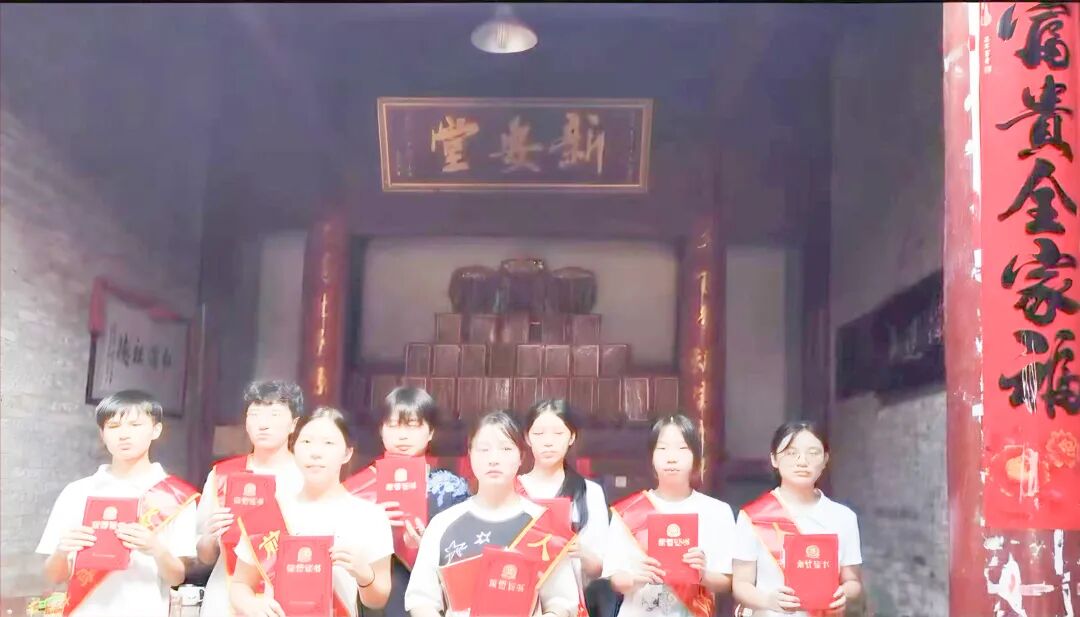
The scholarship ceremony unfolded in a solemn yet warm atmosphere. Under the chairmanship of Association President Yu Xingrong, certificates of honour and scholarship grants were presented to two postgraduate students and six outstanding undergraduate scholars. Clansmen assembled within the hall to witness the young generation’s academic achievements and celebrate the clan’s rising talents. Following the formal ceremony, a festive luncheon was held. Relatives gathered to strengthen kinship ties, discuss heritage and envision future development in great conviviality.
Ancestral blessings nurture later generations; upright family values cultivate gifted youth. This scholarship ceremony not only recognised the award‑winning students for their diligent years of study and hard‑won accomplishments, but also carried forward the Yu Clan’s millennium‑old tradition of revering education. It put into practice the clan’s commitment to fostering talent for community prosperity.
May these honoured students remember their roots and ancestral kindness. May they inherit the noble spirit of Duke Zhongxiang Yu Jing, the moral legacy of Yu Qinggao, and the family precepts set by Yu Qilang. May they pursue knowledge with resolve, cultivate personal integrity and ambition, broaden their learning, and live up to the expectations of the clan. May they grow through knowledge and serve their community with their abilities.
The ancestral shrine shines bright in golden autumn,
Xin’an’s benevolent legacy stretches far and wide.
The seventh ancestor’s virtues teach filial piety and friendship,
Eight gifted youths triumph in scholarly pursuit.
Dedicated study paves the path to lofty heights,
Driven by knowledge they strive for top honours.
Honouring learning elevates the family’s good name,
Generations of talents shall carry the mission onward.
Note on genealogical discrepancies
Genealogical sources record variant details: Yu Qinggao was the seventh‑generation grandson of Yu Jing (Duke Zhongxiang of the Northern Song), born in 1133 (the Bingchen year of the Shaoxing reign period). Two versions survive for his courtesy names: one records Mingyuan with art‑name Wangfeng; another records Shenqing. His official posts are documented as both Assistant Prefect of Tingzhou and Circuit Judicial Commissioner of Minjiang.

 手机版
手机版